Blackjack remains one of the most enduringly popular table games in both physical and digital casinos worldwide. Unlike many casino games that rely entirely on pure, unalterable luck, blackjack blends element of chance with mathematical strategy. Every card dealt shifts the probability of winning, giving disciplined players an opportunity to actively minimize the house edge.
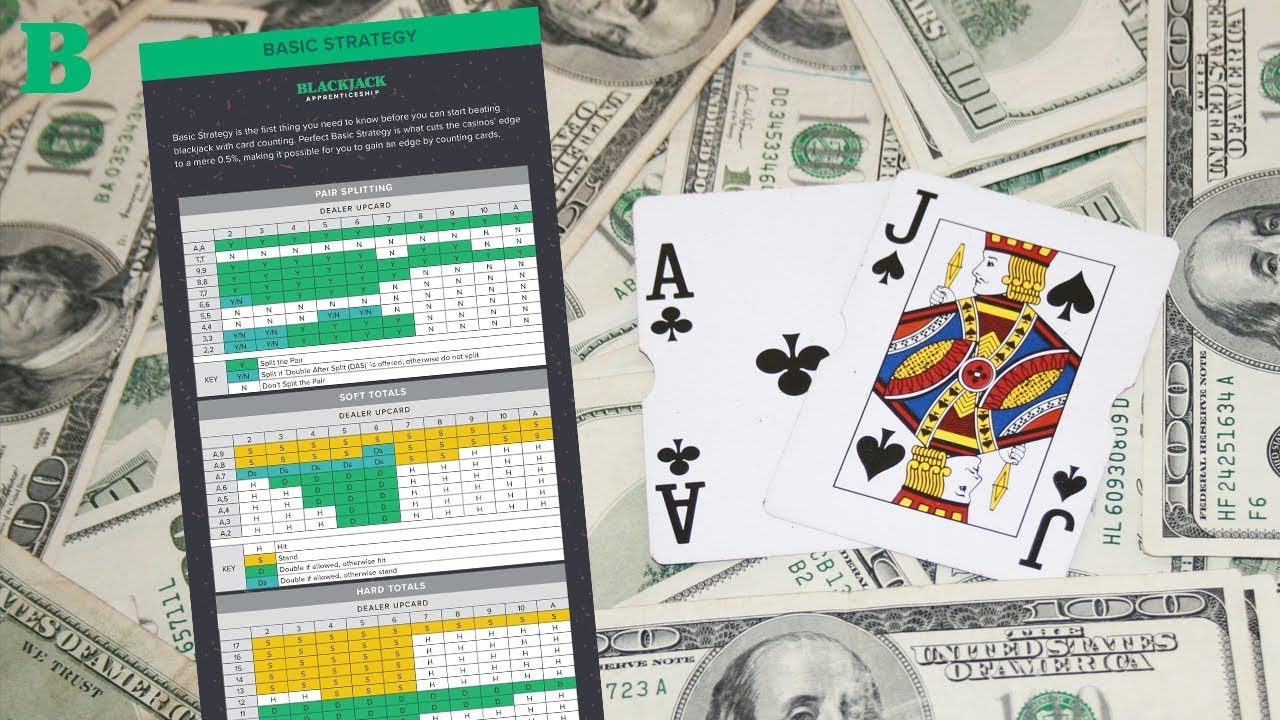
To achieve long-term success at the blackjack table, you must move past relying on gut feelings or uneducated hunches. Instead, professional play is dictated by basic strategy, a mathematically proven framework that determines the absolute best decision for every possible card combination. The core of this strategy revolves around three fundamental choices: when to hit, when to stand, and when to double down. Mastering these decisions is the baseline requirement for transforming from a recreational observer into a sharp, strategic player.
The Three Fundamental Pillars of Basic Strategy
Before analyzing specific card layouts, it is crucial to understand exactly what each primary playing action accomplishes and how it alters your financial risk profile.
-
Hitting: Requesting an additional card from the dealer to increase the total numerical value of your hand. You can hit as many times as you like, provided your total score does not exceed 21. If you go over 21, you bust, resulting in an immediate loss of your wager regardless of the dealer’s final hand.
-
Standing: Concluding your turn and keeping your current card total. When you stand, you pass the action to the next player or the dealer, betting that your current accumulated value will beat the dealer’s final total without exceeding 21.
-
Doubling Down: Doubling your original financial bet in exchange for exactly one more card. This aggressive maneuver allows you to capitalize heavily on advantageous situations, but it carries strict risk: you are legally barred from hitting again, meaning you must live with whatever numerical total that single extra card delivers.
Deciding When to Hit or Stand: Hard Hands vs. Soft Hands
To execute basic strategy flawlessly, you must immediately categorize your two-card hand as either hard or soft. A soft hand contains an Ace that can still be counted as either 1 or 11 without busting. A hard hand contains no Aces, or contains an Ace that must be counted strictly as 1 to prevent the hand from exceeding 21.
Navigating Challenging Hard Hands
Hard hands ranging from 12 to 16 represent the most stressful scenarios in blackjack because taking another card carries a genuine risk of busting. The correct choice in these situations relies entirely on the dealer’s face-up card, known as the upcard.
The dealer is structurally bound by strict casino regulations, typically requiring them to hit on all totals below 17 and stand on all totals of 17 or higher. Because of this mechanical rule, certain dealer upcards are mathematically weak. Specifically, cards ranging from 2 through 6 are known as bust cards. When a dealer displays a 4, 5, or 6, their probability of busting is at its highest, sitting near 42 percent.
When you hold a hard hand of 12 through 16 against a weak dealer upcard of 2 through 6, your optimal strategy is to stand. Even though your total is weak, hitting introduces a massive risk of busting yourself. By standing, you shift the logistical burden entirely to the dealer, forcing them to take cards and hit their way into a potential bust. Conversely, if the dealer shows a strong upcard of 7 through Ace, they are highly likely to make a competitive final hand. In this scenario, you must play aggressively and hit your hard hands below 17, because staying on a low total guarantees a losing outcome once the dealer reveals their cards.
Maximizing Advantageous Soft Hands
Soft hands offer a unique layer of safety because hitting can never result in an immediate bust. If you hold a soft 15 (an Ace and a 4) and receive a 10, your Ace simply adjusts its value from 11 to 1, converting your hand into a hard 15.
A common mistake among amateur players is standing prematurely on weak soft hands like soft 13 through soft 16, simply because they are afraid to disrupt a clean layout. Basic strategy dictates that you should always hit or double down on these hands. A soft 17 (Ace and 6) should also never be stood upon. While a total of 17 sounds decent, it is actually a weak final score that loses to a massive portion of the dealer’s projected distributions. You must always hit a soft 17 against strong dealer upcards to attempt to build a superior total.
Mastering the Art of the Double Down
Doubling down is the primary engine of profitability in blackjack. It allows you to double your financial investment precisely when the mathematical odds shift heavily in your favor.
The most common and lucrative opportunities to double down occur when your two-card starting total equals a hard 9, 10, or 11. In a standard deck, 10-value cards (tens, jacks, queens, and kings) comprise roughly 30 percent of all available cards. This high concentration means that when you hold a two-card total of 10 or 11, you have an exceptionally high probability of catching a 10-value card to complete a powerhouse hand of 20 or 21.
Essential Rules for Doubling Down:
-
Always double down on a hard 11: This is the absolute best starting position in blackjack. You should double an 11 against any dealer upcard except an Ace.
-
Double down on a hard 10: This choice is highly profitable against any dealer upcard ranging from 2 through 9. If the dealer displays a 10 or an Ace, skip the double and simply hit to protect your stack.
-
Double down on a hard 9: This maneuver should only be deployed when the dealer displays a weak upcard of 3, 4, 5, or 6. If the dealer shows anything else, standard hitting is the safer long-term choice.
Soft doubling is another highly effective tool used by advanced players. For example, doubling down on a soft 18 (Ace and 7) against a dealer 3, 4, 5, or 6 allows you to punish the dealer’s weak position while retaining the structural safety of an adjustable Ace.
The Operational Mechanics of Implementation
To successfully execute these strategic insights under live gaming conditions, you must maintain a disciplined analytical routine. Every single round should follow an identical processing sequence:
First, evaluate your hand total and determine if it is hard or soft. Second, look directly at the dealer’s visible upcard and classify it as either strong or weak. Third, cross-reference these two inputs using the rules of basic strategy rather than attempting to guess based on previous rounds or a temporary winning streak. By removing emotion and treating each hand as an isolated mathematical puzzle, you can reduce the casino’s house edge to less than half of a percent, creating a highly sustainable and engaging gaming experience.
Frequently Asked Questions
Why does basic strategy instruct me to hit a hard 12 when the dealer shows a 2 or a 3 upcard?
This is one of the closest mathematical boundaries in basic strategy. While a 2 or 3 upcard is considered relatively weak, it is not as dangerous for the dealer as a 4, 5, or 6. The dealer has a lower chance of busting when showing a 2 or 3. If you stand on a hard 12, you are relying entirely on the dealer busting to win. Because the math shows the dealer will make a standing hand more often than not from a 2 or 3, you must take the risk and hit your 12 to try to build a more competitive score.
Should I ever double down after splitting a pair of cards?
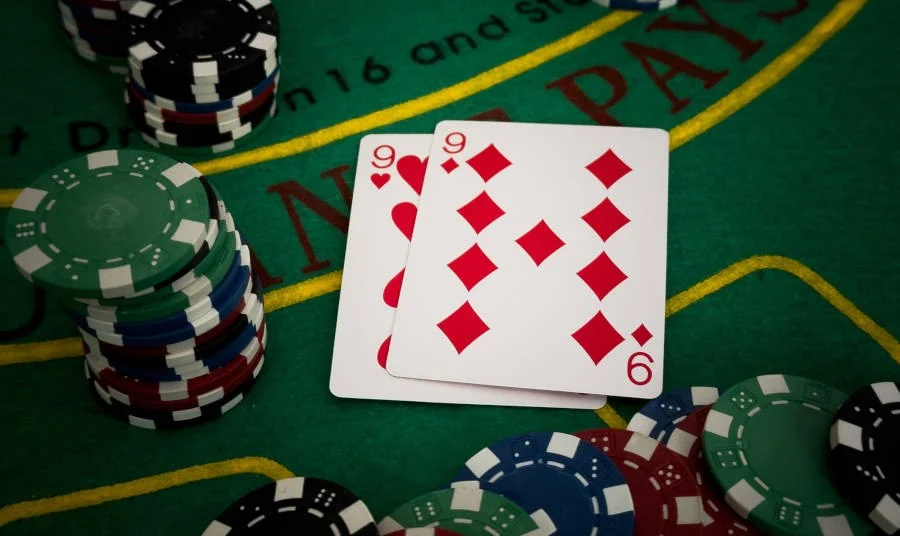
Whether you can double down after splitting depends entirely on the specific house rules of the casino table you are playing at. If the venue allows doubling after a split, it is highly advantageous for the player and should be utilized frequently. For example, if you split a pair of 9s against a dealer 6, and one of your new hands receives a 2 to make a total of 11, you should absolutely double down to maximize your financial leverage against the dealer’s vulnerable position.
Why is it considered a mistake to stand on a soft 17?
Standing on a soft 17 is a common error because 17 looks like a winning number to casual players. However, a 17 never beats a dealer’s completed hand; it only pushes against a dealer 17 and loses to any dealer 18, 19, 20, or 21. Since the dealer must hit until they reach at least 17, they will beat your 17 a vast majority of the time. Because hitting a soft 17 can never bust your hand, you have everything to gain and nothing to lose by taking another card to chase a higher total.
How does the number of card decks in play alter basic strategy decisions?
The foundational concepts of basic strategy remain largely intact whether a game uses a single deck or an eight-deck shoe. However, minor adjustments occur on the margins, particularly regarding doubling down and splitting. In a single-deck game, you have a slightly higher chance of drawing specific card values because removing one card drastically alters the remaining composition. Multi-deck games dilute this effect, making certain borderline double downs slightly less profitable, though the core choices regarding hard hands remain identical.
Is the insurance bet a viable option when the dealer shows an Ace?
No, the insurance bet is mathematically a losing proposition over the long term and should be completely avoided by basic strategy players. Insurance is essentially a separate side bet that pays 2 to 1 if the dealer holds a natural blackjack. For this bet to be profitable, more than one-third of the remaining un-dealt cards would need to be 10-value cards. In a standard shoe, the actual ratio is lower, meaning the house holds a massive 7 percent edge on the insurance line alone.
What should I do if the casino rules require the dealer to hit on a soft 17?
When a casino modifies its rules to force the dealer to hit on a soft 17 instead of standing, it shifts the math slightly in the house’s favor. To combat this rule modification, you must adjust your doubling down thresholds. Specifically, you should become more aggressive with your doubling execution, choosing to double down on a hard 11 against a dealer Ace, and expanding your soft doubling ranges to punish the increased variance the dealer faces when hitting their soft 17s.