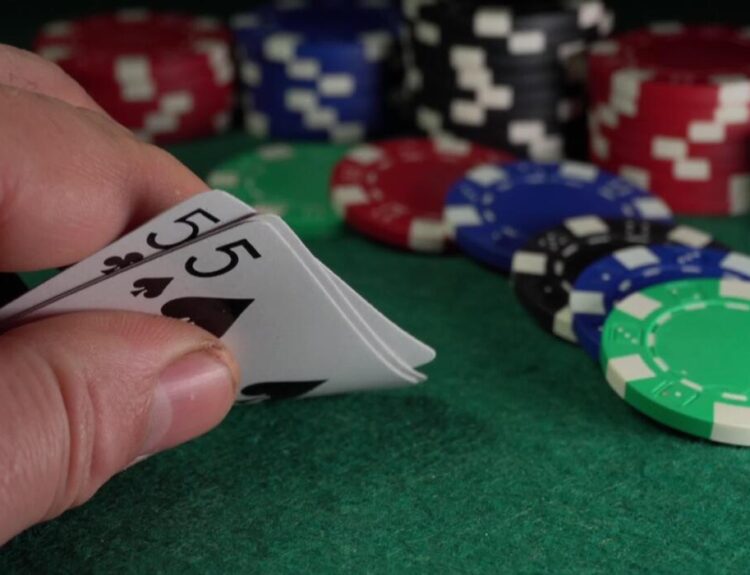

Poker has long stood as a pillar of strategic card gaming, capturing the attention of casual enthusiasts and professional players alike. While the broader game includes dozens of distinct iterations, two dominant forces control the modern landscape: Texas Hold’em and Omaha.
At a superficial glance, these two variants share an identical structural skeleton. Both utilize standard five-card hand rankings, incorporate a dealer button with forced blind bets, and rely on communal cards dealt face-up in the middle of the table. However, underneath these shared characteristics lies a massive divergence in mathematical complexity, psychological execution, and general variance. Deciding which variant aligns with your mental approach to gaming requires a deep analysis of how these rule variations change optimal strategy.
The Mechanics of Texas Hold’em
Texas Hold’em is the most visible poker variant globally, serving as the default format for major tournament broadcasts and home games. The game is highly accessible due to its streamlined starting conditions.
In Hold’em, each participant receives exactly two private cards face down, referred to as hole cards. Five community cards are subsequently dealt across three distinct phases: the flop (three cards), the turn (one card), and the river (one card). Four betting rounds take place throughout this sequence. To form a final five-card poker hand, a player can utilize any combination of their two private cards and the five community cards. A player can use both private cards, only one private card, or occasionally none at all, opting instead to play the five cards displayed on the board.
The Mechanics of Omaha
Omaha poker introduces a structural change that completely transforms the nature of hand construction. Instead of receiving two private cards, every player is dealt exactly four hole cards at the beginning of the hand.
While receiving four cards provides a player with significantly more options, Omaha enforces a strict, unyielding rule regarding how a final hand must be constructed:
-
You must use exactly two of your four private hole cards.
-
You must use exactly three of the five community cards.
This fundamental rule causes frequent errors among transitioning players. For example, if the community board features four hearts and a player holds the ace of hearts as their single private heart card, they do not possess a flush. In Hold’em, that single card would suffice. In Omaha, the absence of a second private heart makes a flush mathematically impossible for that hand.
Mathematical Variance and Hand Values
The presence of four hole cards instead of two fundamentally alters mathematical probability in Omaha. A single four-card hand in Omaha actually yields six distinct two-card combinations. This means that when a round begins, players are holding multiple potential hands simultaneously, which exponentially elevates the average strength of hands shown down at the end of a round.
In Texas Hold’em, holding a single pair before the community cards appear is considered a solid starting position, and hitting a top pair on the flop often warrants a sizable bet. In Omaha, a single pair is almost entirely worthless. Winning hands in Omaha routinely consist of flushes, full houses, or straights. If the community board pairs, a simple flush is no longer safe, as the mathematical probability that an opponent has constructed a full house skyrockets compared to Hold’em.
Bet Structures: No-Limit vs. Pot-Limit
The mechanical differences between these games extend to how betting limits are applied. Texas Hold’em is most commonly played under a No-Limit structure. This means that at any given moment during a betting round, a player can risk their entire chip stack on a single decision. No-Limit betting places an immense premium on raw courage, fold equity, and the ability to maximize pressure on an opponent’s psychological thresholds.
Conversely, Omaha is traditionally played as Pot-Limit Omaha. Under these regulations, the maximum allowable bet or raise is constrained by the exact size of the current pot. Because players cannot simply shove all of their chips into the middle to force an opponent to fold, Pot-Limit Omaha prevents individuals from using brute-force bet sizing to protect vulnerable hands. The game naturally progresses through multiple streets of betting, making it a game focused heavily on calculation and drawing equities rather than abrupt psychological bluffs.
Post-Flop Play and Equity Distribution
Equity represents a player’s mathematical expectation of winning a pot at any specific point during a hand. In Texas Hold’em, equity distributions are frequently lopsided. If one player holds a dominant hand on the flop, they might hold an 80 percent to 20 percent advantage over their opponent. This wide gap allows skilled Hold’em players to confidently protect their hands and force mistakes from trailing opponents.
In Omaha, equities run incredibly close together on the flop. It is common for a made hand to be an exact 55 percent to 45 percent favorite against a massive drawing hand that holds multiple straight and flush possibilities. Because the margins are consistently thin, Omaha players must develop a tolerance for extreme swings in fortune, often referred to as variance. A player can execute flawless mathematical strategy over a session and still endure significant financial losses due to the highly interactive nature of Omaha hand combinations.
Evaluating Which Profile Suits Your Style
Choosing between these two variations comes down to evaluating your personal psychological strengths and long-term gaming goals.
Why Texas Hold’em Might Fit You
-
Psychological Warfare: Hold’em rewards the ability to read human behavior, manipulate table table images, and execute massive bluffs using the threat of a No-Limit bet.
-
Simpler Visual Processing: Tracking two private cards against a board requires less cognitive energy, making it easier to play extended sessions without mental burnout.
-
Game Availability: Because of its immense popularity, finding a Texas Hold’em game at local poker rooms or online platforms is effortless at any time of day.
Why Omaha Might Fit You
-
Action-Driven Gameplay: If you find the slow, disciplined folding required in Hold’em tedious, Omaha offers constant engagement due to the fluid nature of four-card starting hands.
-
Complex Puzzle Solving: Players who possess strong mathematical inclinations and enjoy calculating multi-way drawing combinations will appreciate the analytical depth of Omaha.
-
Exploiting Technical Mistakes: Because Omaha rules can confuse casual participants, disciplined players can gain a massive competitive edge by exploiting opponents who overvalue weak hands.
Frequently Asked Questions
Why do players say that bluffing is harder in Pot-Limit Omaha compared to No-Limit Hold’em?
Bluffing is significantly more difficult in Omaha for two reasons: the Pot-Limit betting structure and the sheer volume of card combinations. In No-Limit Hold’em, you can bet an enormous amount of chips at any moment to terrify an opponent into folding. In Omaha, you can only bet what is currently in the pot, which often gives opponents excellent mathematical odds to call. Furthermore, because every player holds four cards, the probability that an opponent has connected with a portion of the community board is much higher, reducing the likelihood that a bluff will force a fold.
Is it possible to hold a statistical lock on the flop in Omaha?
It is incredibly rare to hold a completely unassailable hand on the flop in Omaha compared to Hold’em. Even if you flop the absolute best available straight, an opponent might hold a combination of cards that gives them a flush draw along with a set of three of a kind. This collection of drawing assets means their hand can have more than 40 percent equity against your currently completed straight, ensuring that your advantage remains volatile until the final cards are dealt.
How does the concept of position shift between these two variations?
While acting last is advantageous in all poker formats, position is arguably more important in Pot-Limit Omaha. Because betting limits prevent you from ending a hand abruptly with an overbet, having the final action on each street allows you to control the size of the pot. In position, you can choose to take a free card by checking along, or you can execute a precisely sized pot bet to maximize value based on the exact betting behavior your opponents displayed before you.
What does the term wrapping mean in Omaha strategy?
A wrap is a massive straight draw unique to Omaha that occurs when a player’s four hole cards connect tightly with the community cards on the flop. While a standard open-ended straight draw in Hold’em relies on exactly eight remaining cards in the deck to complete the hand, a well-constructed wrap in Omaha can utilize up to twenty different cards from the deck to complete a straight on the turn or river, making it a highly valuable drawing asset.
Do professional players generally specialize in one format or play both equally?
Most high-stakes players maintain a working knowledge of both formats, but true specialization is common due to the opposing mindsets required for each game. Hold’em specialists spend years mastering specific pre-flop bet sizings and balancing their bluffing ratios. Omaha specialists focus heavily on post-flop equity calculations and identifying subtle structural flaws in how opponents value their starting hands, meaning the two games attract different analytical skill sets.
How does table selection strategy alter when moving from Hold’em to Omaha?
When selecting a table in Texas Hold’em, players often look for aggressive opponents who can be baited into making catastrophic No-Limit mistakes. In Omaha, ideal table selection involves tracking down passive opponents who play too many starting hands and fail to understand the mandatory two-card rule. Look for players who consistently pay maximum prices to chase low-value flushes or small straights, as these structural errors generate massive profit margins for disciplined Omaha players.